Mid-Century Italian Design: Characteristics, Materials, and Enduring Icons (1930–1980)
A journey through form, innovation, and philosophy in Italian Mid-Century interiors
Italian Mid-Century design, spanning roughly from the 1930s to the late 1970s, represents one of the most influential and sophisticated chapters in the history of interior design. Rooted in a unique balance between artisanal heritage and industrial innovation, this period defined an unmistakable Italian approach to modern living—refined, human-centered, and timeless.
Unlike other international Mid-Century movements, Italian design never fully surrendered to rigid functionalism. Instead, it embraced expressive forms, luxurious yet honest materials, and a philosophical vision where beauty and usability coexist naturally. This approach continues to inspire contemporary interiors and collectible design markets worldwide.
Historical Context: Between Craft and Industry
Post-war Italy was a fertile ground for experimentation. Economic recovery, technological progress, and a strong network of craft traditions allowed designers to explore new ideas without abandoning cultural roots. Design became a bridge between handmade excellence and serial production, positioning Italy as a global leader.
Magazines, exhibitions, and institutions such as the Triennale di Milano promoted dialogue between architects, designers, and manufacturers. The result was a design culture deeply connected to everyday life, where furniture was not merely functional but emotionally engaging.
Materials: A Dialogue of Tradition and Modernity
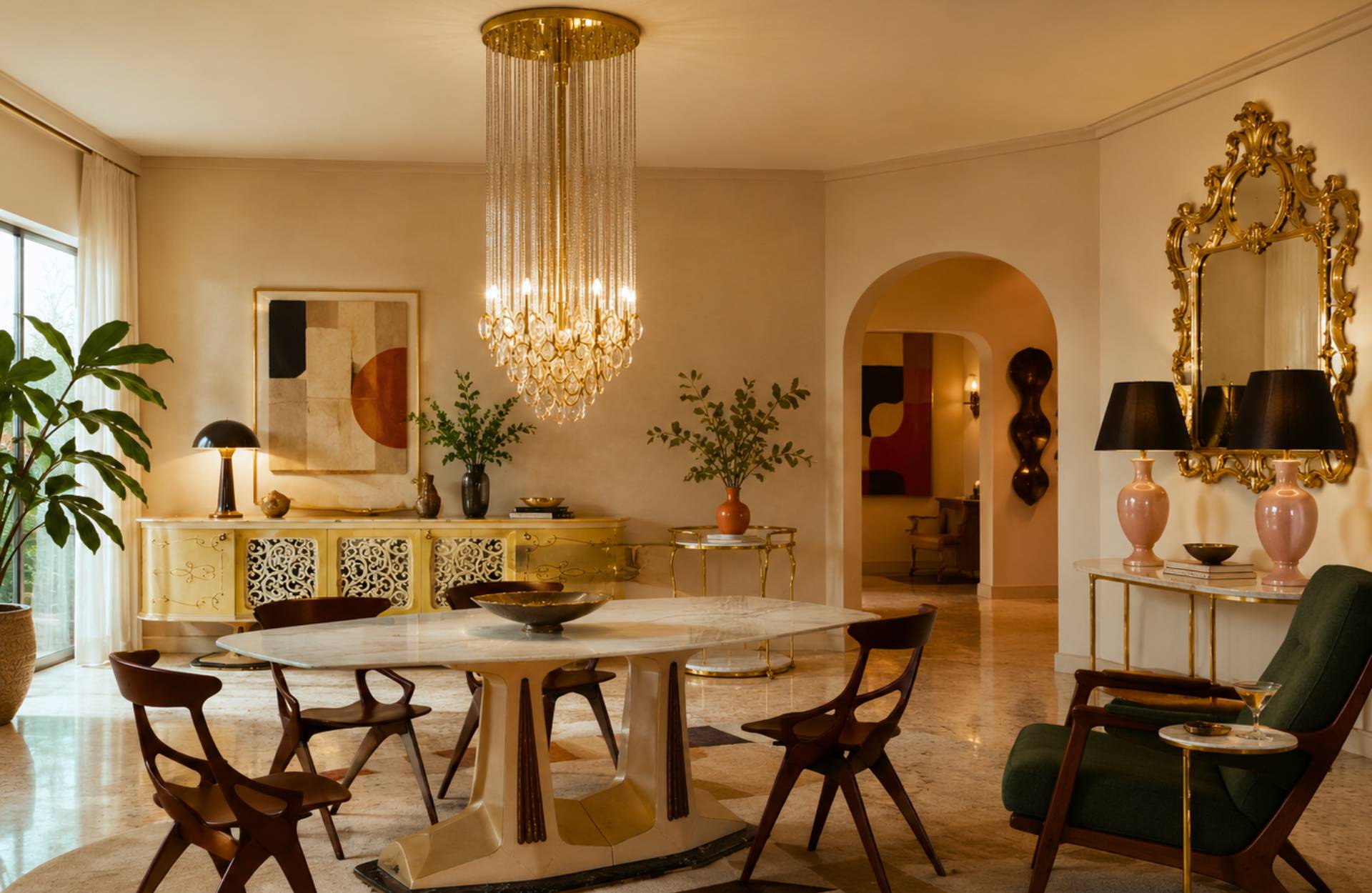
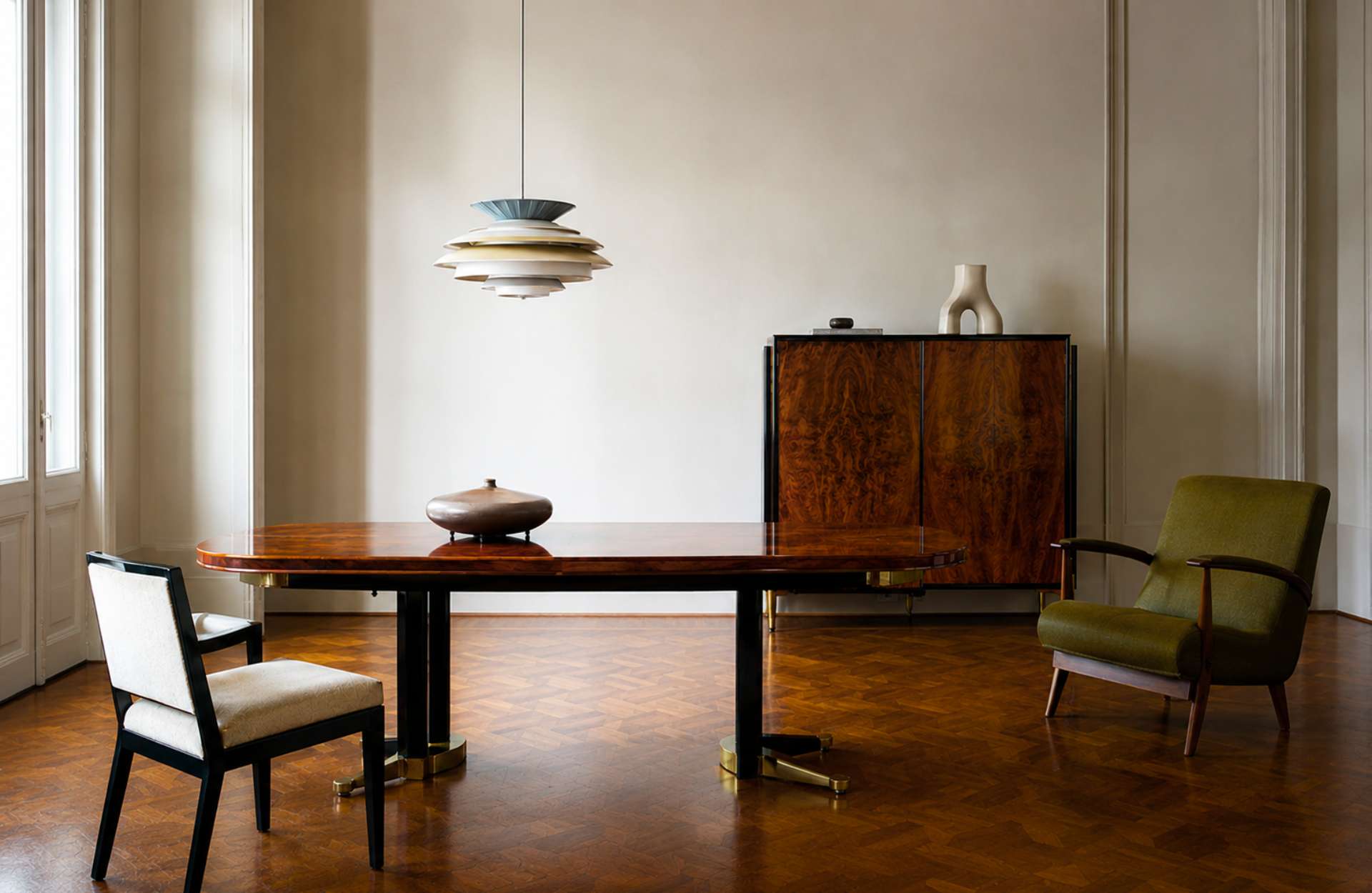
One of the defining traits of Italian Mid-Century furniture is its sophisticated use of materials. Designers favored solid woods such as teak, walnut, and rosewood for their warmth and durability, often combined with modern materials like brass, steel, glass, and leather.
Rather than hiding material qualities, Italian designers celebrated them. Wood grains remained visible, metals were brushed or polished, and glass was shaped into sculptural forms. This honesty of materials reinforced the idea that design should age gracefully, developing character over time rather than losing relevance.
Forms and Shapes: Soft Geometry and Movement
Italian Mid-Century design is immediately recognizable for its fluid lines, organic curves, and carefully balanced proportions. Furniture pieces often appear light, almost floating, thanks to tapered legs, cantilevered structures, and clever engineering.
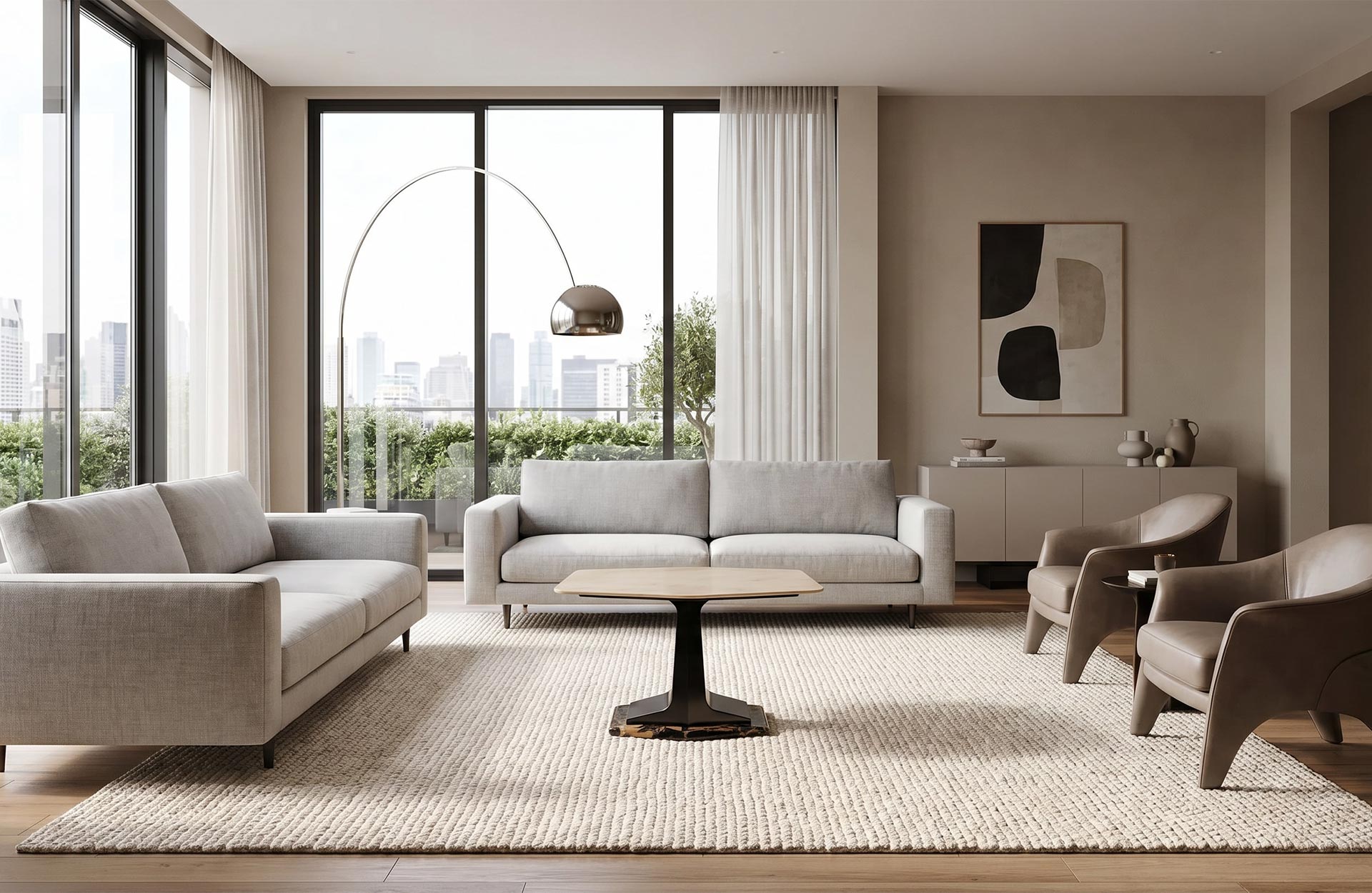
Seating designs favored ergonomic comfort without visual heaviness, while storage units emphasized horizontal development and modularity. The influence of architecture is evident: furniture was conceived as part of a larger spatial composition, not as isolated objects.
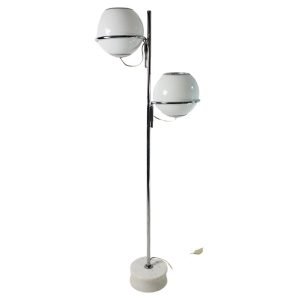
Floor Lamp Model 1094 by Gino Sarfatti Italy 1969
Original price was: €4,900.00.€3,920.00Current price is: €3,920.00.
Design Philosophy: Human-Centered Elegance
At its core, Italian Mid-Century philosophy was deeply humanistic. Designers believed that objects should improve daily life emotionally as well as practically. This mindset rejected cold minimalism in favor of warmth, tactility, and subtle irony.
Functionality was essential, but never at the expense of expression. Many iconic pieces integrate playful mechanisms, surprising silhouettes, or sculptural elements—demonstrating that seriousness and creativity can coexist.
Icons of Italian Mid-Century Design
Several designers shaped the identity of this era, leaving behind objects that are now considered timeless classics.
Gio Ponti combined architectural rigor with poetic lightness. His furniture designs often feature slim proportions and refined details, reflecting his belief that elegance should never be heavy.
Osvaldo Borsani pushed technical boundaries, experimenting with modular systems and adjustable furniture that anticipated contemporary living needs.
Achille Castiglioni redefined lighting and everyday objects through irony and conceptual intelligence, transforming simple components into design statements.
Marco Zanuso explored new materials and production techniques, contributing to the democratization of high-quality modern furniture.
These figures shared a common vision: design as a cultural act, accessible yet sophisticated.
Italian Mid-Century Interiors Today
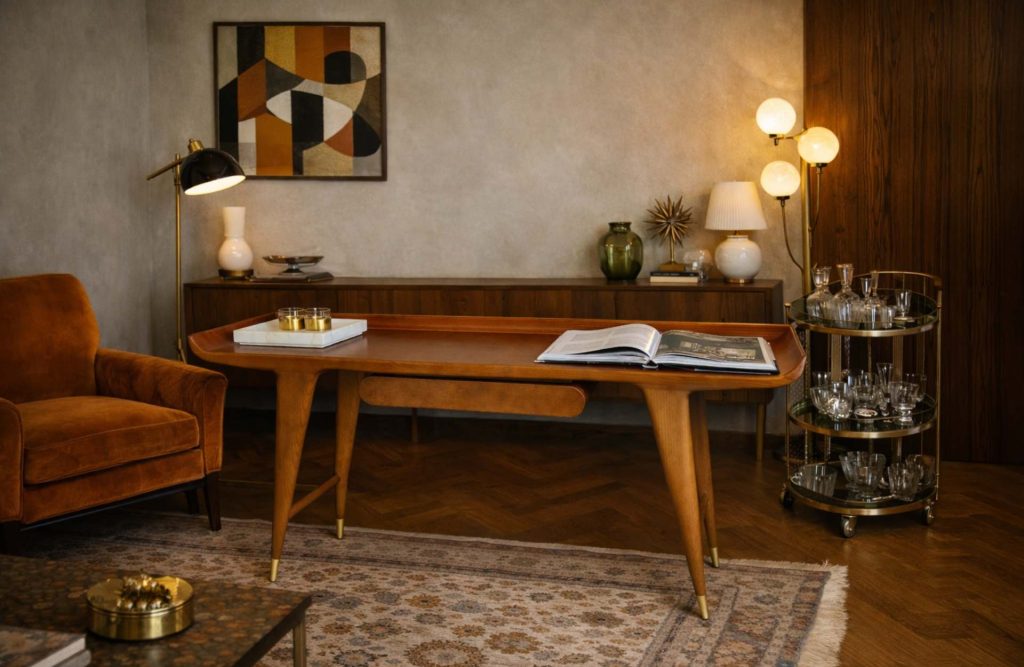
The enduring appeal of Italian Mid-Century interiors lies in their adaptability. These pieces integrate seamlessly into both classic and contemporary spaces, offering warmth, character, and authenticity. Whether used as focal points or combined with modern elements, they create environments that feel curated rather than styled.
For collectors and design enthusiasts, original Mid-Century Italian furniture represents not only aesthetic value but also cultural and historical significance. Each piece tells a story of experimentation, craftsmanship, and forward-thinking vision.
Why Italian Mid-Century Design Still Matters
Today’s renewed interest in sustainable living and long-lasting design aligns perfectly with Mid-Century Italian values. Durability, quality materials, and timeless aesthetics stand in contrast to disposable trends. Choosing these designs means investing in objects that transcend fashion and retain meaning.
Stores like La Contessa Arreda, based in Italy and operating globally, play a crucial role in preserving and promoting this heritage by offering curated objects that tell a story of design excellence, innovation, and Italian identity.
For an international audience, Italian Mid-Century design continues to symbolize refined living, intellectual depth, and emotional warmth—qualities that define true luxury.