How to Recognize Authentic Italian Vintage Furniture
A Practical Guide to Materials, Construction Details, and Authenticity Markers from the Golden Age of Italian Design
Italian vintage furniture is among the most sought-after categories in the international design market. From the refined craftsmanship of the 1930s to the innovative creations of the 1950s, 1960s, and 1970s, authentic Italian pieces embody a unique combination of artistry, functionality, and technical excellence. However, the growing popularity of Italian vintage furniture has also led to an increase in reproductions and incorrectly attributed items.
Whether you are a collector, interior designer, or homeowner searching for an authentic statement piece, understanding how to identify original furniture is essential. This guide explores the key materials, construction techniques, and authenticity markers that distinguish genuine Italian vintage furniture from later reproductions.
Why Authenticity Matters
Authentic Italian mid-century furniture is valued not only for its aesthetic appeal but also for its historical significance and craftsmanship. Original pieces often appreciate in value over time, while reproductions typically do not offer the same investment potential.
Furniture produced in Italy between the 1930s and the early 1980s reflects important design movements, technological innovations, and regional manufacturing traditions. Recognizing authenticity helps buyers make informed decisions and preserve design heritage.
Understanding the Historical Context
Before examining details, it is useful to understand the major periods of Italian furniture production.
1930s to 1940s
This period was influenced by Rationalism and Art Deco. Furniture often featured:
- Walnut and other noble woods
- Elegant veneers
- Geometric forms
- Fine handcrafted details
1950s to 1960s
The post-war economic boom transformed Italian design into a global reference point. Designers experimented with:
- Teak and rosewood veneers
- Brass accents
- Sculptural forms
- Innovative manufacturing techniques
1970s to Early 1980s
Furniture became more experimental and expressive, introducing:
- Lacquered surfaces
- Modular systems
- Glass and chrome elements
- Bold geometric compositions
Knowing the production period helps determine whether materials and construction methods are consistent with the claimed age.
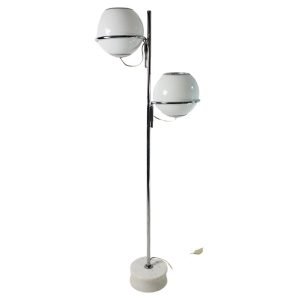
Floor Lamp Model 1094 by Gino Sarfatti Italy 1969
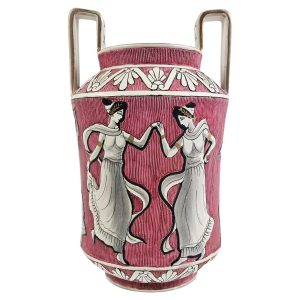
Original price was: €4,900.00.€3,920.00Current price is: €3,920.00.Mid Century Vase by Deruta Italy
€800.00
Examine the Wood and Veneers Carefully
One of the first indicators of authenticity is the quality of the materials.
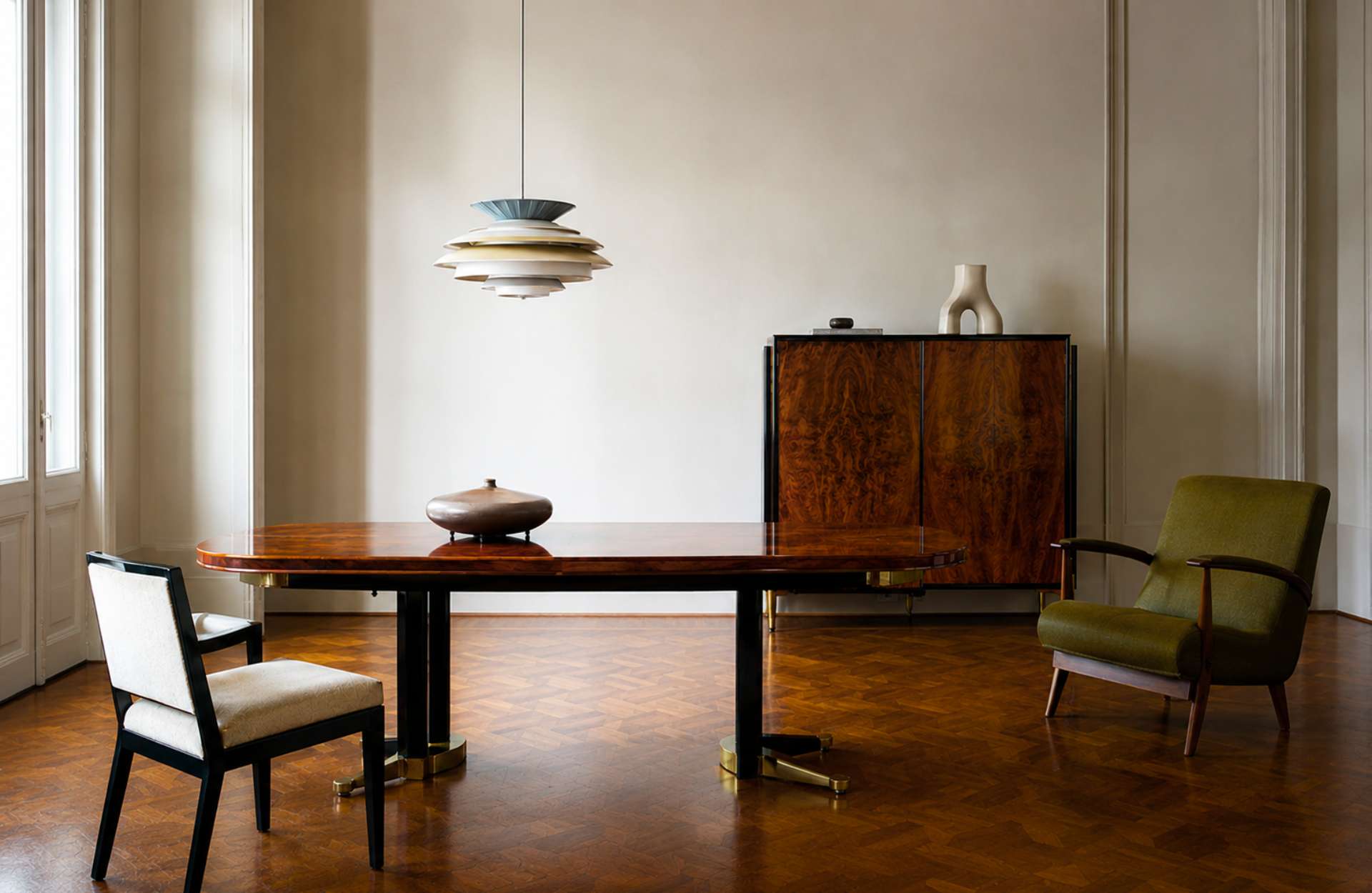
Authentic Italian vintage cabinets, sideboards, dining tables, and bookcases were commonly produced using solid wood structures combined with high-quality veneers.
Common woods include:
- Walnut
- Teak
- Rosewood
- Mahogany
- Oak
Original veneers generally display natural grain variation and depth. Modern reproductions often use printed laminates or low-quality veneers that appear excessively uniform.
When inspecting a piece, observe:
- Natural grain continuity
- Aging consistency
- Patina development
- Edge finishing
A genuine vintage piece typically shows subtle wear patterns accumulated over decades rather than artificially created distress marks.
Look for Authentic Joinery Techniques
Construction details reveal far more than surface appearance.
Traditional Italian manufacturers relied on sophisticated joinery methods that ensured durability and structural integrity.
Typical construction features include:
- Dovetail joints
- Mortise-and-tenon joints
- Finger joints
- Precision wood connections
Original pieces rarely depend entirely on visible screws or modern mechanical fasteners.
Drawer interiors are particularly useful for evaluation. Handmade or early industrial production methods usually leave subtle tool marks and handcrafted details that are difficult to replicate convincingly.
Check Labels, Stamps, and Manufacturer Marks
One of the strongest authenticity indicators is the presence of original identification marks.
These may include:
- Paper labels
- Metal plaques
- Ink stamps
- Fire-branded markings
- Manufacturer decals
During the mid-century period, many prestigious Italian manufacturers identified their products with factory labels or production marks.
Well-preserved labels can significantly increase the credibility and value of a piece.
However, the absence of a label does not automatically indicate a reproduction. Over decades, labels can be removed, damaged, or lost during restoration.
In such cases, construction quality and material analysis become even more important.
Evaluate the Hardware
Original hardware often provides valuable clues.
Authentic Italian vintage furniture frequently features:
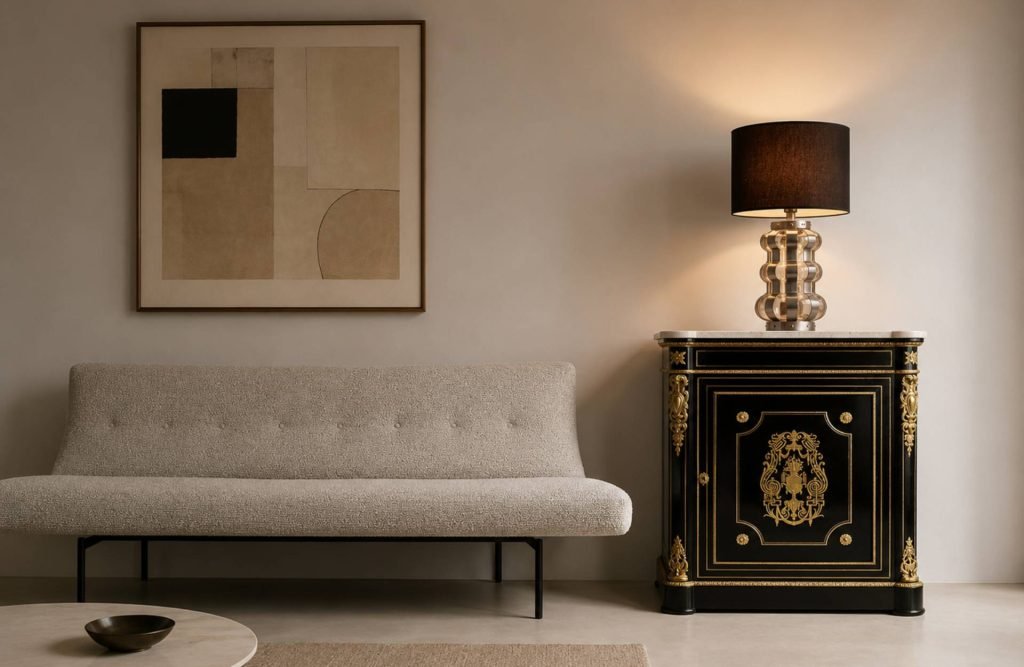
- Solid brass handles
- Cast metal components
- Precision hinges
- Custom-designed pulls
Hardware should be consistent with the furniture’s production period.
For example, a sideboard supposedly manufactured in the late 1950s should not contain contemporary soft-close mechanisms or modern machine-made fittings.
Signs of age should also appear naturally across all metal elements rather than being concentrated in isolated areas.
Observe the Patina
Patina is one of the most misunderstood aspects of vintage furniture evaluation.
Authentic aging develops gradually through decades of use and environmental exposure.
A genuine patina may include:
- Slight color variation
- Softened edges
- Minor surface oxidation
- Consistent wear patterns
Artificial aging often appears exaggerated or inconsistent.
For example, heavily distressed corners combined with perfectly preserved surfaces may suggest intentional reproduction techniques rather than genuine age.
Experienced collectors often consider patina one of the most reliable indicators of authenticity.
Analyze the Design Language
Italian design is recognized worldwide for its distinctive proportions and attention to detail.
Authentic vintage furniture often demonstrates:
- Elegant visual balance
- Refined craftsmanship
- Functional innovation
- High-quality material integration
When evaluating a piece, consider whether its design vocabulary aligns with the claimed period.
A cabinet attributed to the 1950s should display characteristics associated with post-war Italian modernism rather than contemporary minimalist aesthetics.
Studying iconic designers and manufacturers can significantly improve recognition skills.
Notable figures include:
- Gio Ponti
- Osvaldo Borsani
- Carlo Mollino
- Ico Parisi
- Franco Albini
Understanding their work helps buyers identify authentic stylistic characteristics.
Signs That May Indicate a Reproduction
Several warning signs deserve attention.
Be cautious when encountering furniture that presents:
- Perfectly uniform wear
- Modern hardware on supposedly vintage pieces
- Artificial distressing
- Synthetic materials inconsistent with the period
- Questionable provenance
- Unusually low prices compared to market value
No single factor proves a piece is inauthentic, but multiple inconsistencies should encourage further investigation.
Experienced dealers evaluate provenance, construction methods, materials, and restoration history before offering pieces for sale. This expertise reduces the risk of purchasing misattributed or reproduced furniture.
For buyers seeking authentic Italian mid-century modern furniture, curated collections from established dealers often represent the safest and most reliable option.
Recognizing authentic Italian vintage furniture requires a combination of historical knowledge, material awareness, and attention to detail. Original pieces reveal their authenticity through quality craftsmanship, period-correct materials, sophisticated joinery, genuine patina, and coherent design language.
While labels and provenance can provide valuable confirmation, the most reliable evaluations consider the furniture as a whole. Materials, construction techniques, hardware, and aging patterns should all align with the claimed period and origin.
As global interest in Italian design, mid-century modern furniture, and collectible interiors continues to grow, developing these evaluation skills becomes increasingly important for collectors and design enthusiasts alike.
Why Buy Authentic Vintage Furniture from La Contessa Arreda
Finding authentic Italian vintage furniture requires experience, knowledge, and access to reliable sources. At La Contessa Arreda, every piece is carefully selected based on its historical value, craftsmanship, materials, and overall condition.
With years of expertise in Italian antiques and vintage design, La Contessa Arreda specializes in sourcing original furniture from different periods, including Mid-Century Modern, Art Deco, Neoclassical, and traditional Italian styles.
Each item is thoroughly inspected to evaluate:
- Authenticity and provenance
- Construction quality and materials
- Original details and craftsmanship
- Structural integrity and restoration requirements
The goal is to offer collectors, interior designers, and homeowners genuine pieces that preserve the character and elegance of Italian furniture heritage.
Whether you are looking for a vintage sideboard, vintage Italian seating, dining table, trolleys & bar carts, cabinet, bookcase, or decorative antique, La Contessa Arreda provides carefully curated furniture selected for both its aesthetic appeal and long-term value.
By purchasing from a trusted specialist, buyers can invest with greater confidence, knowing that every piece has been professionally evaluated and accurately represented.
FAQ
Before buying Italian vintage furniture, ask the seller:
Is there documented provenance?
Ownership history, invoices, or original purchase documents can strengthen authenticity claims.
Has the furniture been restored?
Professional restoration is common and often beneficial. However, extensive modifications can affect both value and originality.
Are all components original?
Handles, feet, doors, shelves, and hardware should ideally remain original to the piece.
Can detailed photographs be provided?
Close-up images of joints, labels, interiors, and hardware can reveal important authenticity clues.
Why Specialized Dealers Offer Greater Confidence
Purchasing from reputable vintage furniture specialists provides an additional layer of security.