Iconic Italian Designers in La Contessa Arreda Collection
Masterpieces of Italian Mid-Century Design from 1930 to 1980
Between 1930 and 1980, Italian design produced some of the most influential figures in the history of modern furniture design. These designers did more than create objects; they shaped a cultural language that merged architecture, craftsmanship, and industrial innovation. Today, their work continues to define the identity of Italian mid-century furniture, and curated collections like those of La Contessa Arreda offer access to this enduring legacy.
This article examines key designers active during this period and highlights their most representative pieces, connecting their vision to the evolution of Italian design culture.
Gio Ponti: Lightness as a Philosophy
Few figures embody the essence of Italian modern design like Gio Ponti. Working across architecture, interiors, and product design, Ponti pursued a vision of lightness, elegance, and functionality.
His most iconic piece, the Superleggera chair (1957), produced by Cassina, represents a breakthrough in both engineering and aesthetics. Weighing just over 1.5 kg, it redefined what a wooden chair could achieve in terms of durability and minimalism.
Ponti’s work is essential in any serious mid-century furniture collection because it bridges pre-war rationalism and post-war innovation. His designs remain highly relevant for contemporary interiors seeking refined simplicity.
Franco Albini: Rationalism Meets Craftsmanship
Franco Albini developed a design language rooted in Italian Rationalism, yet enriched by exceptional attention to materials and detail. His work demonstrates how craft tradition and modernist thinking can coexist.
The Veliero bookshelf (1940) stands as one of his most radical projects. Suspended and tension-based, it anticipated later developments in lightweight structural design. Similarly, his Margherita chair combines natural materials like rattan with a geometric clarity that defines Italian mid-century aesthetics.
Albini’s pieces are particularly relevant for collectors interested in structural elegance and timeless construction principles.
Ico Parisi: Sculptural Modernism
Ico Parisi represents a more expressive side of Italian furniture design, where form becomes fluid and almost architectural. His work often blends organic lines with precise craftsmanship, resulting in pieces that feel both dynamic and controlled.
Seating designs from the 1950s, especially lounge chairs and armchairs, showcase his ability to combine comfort, proportion, and sculptural identity. These pieces are highly valued in the vintage market for their distinctive silhouettes and artisanal quality.
Parisi’s work fits well within curated environments that aim to balance visual impact with historical authenticity.
Floor Lamp Model 1094 by Gino Sarfatti Italy 1969
Original price was: €4,900.00.€3,920.00Current price is: €3,920.00.Italian Organic Coffee Table 1970’s
€3,500.00
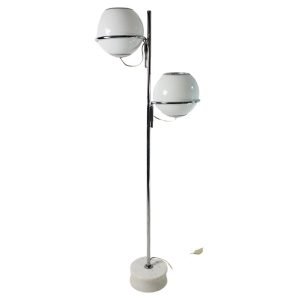
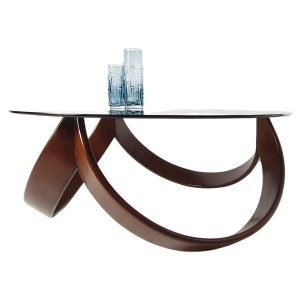
Carlo Mollino: Experimental Elegance
Carlo Mollino occupies a unique position in 20th-century Italian design. His approach was unconventional, often blending engineering precision with surreal aesthetics.
The Arabesco table (1949) is one of his most celebrated works, characterized by a complex wooden base that resembles a sculptural composition. Mollino’s furniture challenges traditional categories, positioning itself between functional object and artistic statement.
Collectors and design enthusiasts often seek his work for its rarity and conceptual depth, making it a strong asset within high-level vintage design collections.
Achille Castiglioni & Pier Giacomo Castiglioni: Function with Intelligence
The Castiglioni brothers redefined the relationship between function and creativity. Their approach was analytical yet playful, often reinterpreting everyday objects into innovative design solutions.
The Arco lamp (1962), produced by Flos, is one of the most iconic lighting designs in history. It eliminates the need for ceiling fixtures by using a marble base and arched steel structure, demonstrating how design can solve spatial problems elegantly.
Their work is central to understanding how Italian design achieved global recognition, combining usability with strong visual identity.
Vico Magistretti: Industrial Clarity
Vico Magistretti contributed significantly to the industrialization of Italian furniture production. His designs are characterized by essential forms, modular thinking, and material innovation.
The Carimate chair (1959) exemplifies his approach: simple, functional, yet visually distinctive through its use of color and proportion. Magistretti’s work played a key role in making modern Italian furniture accessible without compromising design quality.
His pieces remain highly adaptable to contemporary interiors, especially those focused on clean lines and functional living.
Marco Zanuso: Technology and Comfort
Marco Zanuso introduced a new level of technological experimentation into Italian design. His work often focused on ergonomics, new materials, and mass production techniques.
The Lady armchair (1951), developed with Arflex, is a milestone in the use of foam rubber and elastic supports, marking a shift toward modern upholstered furniture.
Zanuso’s designs are particularly relevant for understanding the transition from artisanal production to industrial design systems, a key theme in the evolution of Italian furniture.
Curated Design as Cultural Strategy
The presence of these designers within a curated collection is not incidental. It reflects a precise strategy: selecting pieces that represent turning points in design history, not just aesthetic trends.
La Contessa Arreda positions itself within this framework by offering objects that embody:
- historical relevance
- material quality
- timeless design language
This approach aligns with current search behaviors, where users seek not just products but context, authenticity, and narrative. For this reason, integrating iconic designers into the catalog strengthens both SEO performance and brand authority.
Why These Designers Still Matter
The continued relevance of these designers lies in their ability to address fundamental questions:
- How should furniture relate to space?
- What is the balance between form and function?
- How can design respond to social and technological change?
From Gio Ponti’s lightness to Zanuso’s industrial logic, these figures define a spectrum that still informs contemporary design. Their work is not nostalgic; it is structurally modern, capable of integrating seamlessly into today’s interiors.
For a global audience, collections like La Contessa Arreda provide a gateway into this world, offering pieces that are both historically grounded and visually contemporary.